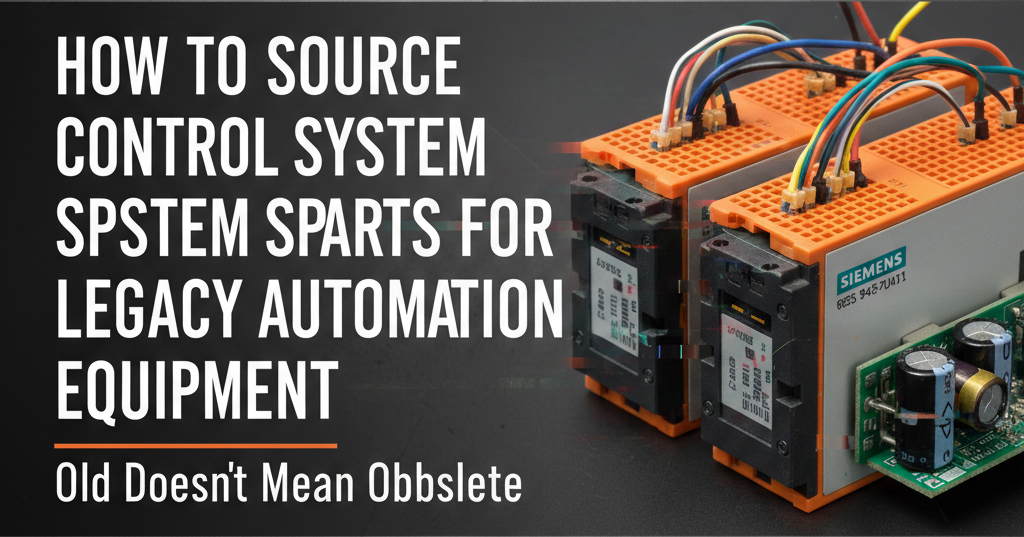
The problem with aging systems? Parts become ghosts.
You’ve got a production line that runs like a dream. No bugs, no software clashes, no flaky sensors—just beautiful, rhythmic automation that hasn’t failed you in years.
Until it does.
Then you realize the controller you need hasn’t been manufactured since 2009. You dig through the usual vendors—nothing. You Google the part number—nada. You try your Siemens rep—he offers a migration plan that costs as much as your forklift.
Welcome to the wonderful world of sourcing hard-to-find Siemens spare parts.
Why Legacy Equipment Still Runs the World
Despite the hype around “smart factories” and IIoT, many plants run on rock-solid legacy systems. We’re talking:
- Siemens S5 or early S7 controllers
- Classic HMI panels
- Proprietary servo drives or communication modules
Why? Because they work. And replacing them involves downtime, retraining, and ripping out wiring that hasn’t moved in decades.
So instead of full upgrades, most facilities opt for a far more pragmatic solution: find the part, fix the issue, keep the line running.
Start With the Exact Part Number—No Guessing
When it comes to legacy Siemens spare parts, guessing will get you burned.
Siemens uses precise product codes that indicate firmware, revision level, and hardware compatibility. A part might look identical on the surface, but a different version number could mean it won’t talk to your other hardware—or worse, fry when powered.
Always double-check:
- Part number (ex: 6ES5 943-7UA11)
- Firmware version
- Bus type and power requirements
- Physical connector configuration
When in doubt? Reach out to a supplier like Classic Automation who can help cross-check compatibility across Siemens generations.
Avoid Online Marketplaces for High-Risk Components
eBay might be fine for sourcing used game consoles. For automation gear? It’s a gamble.
While you might find a cheap Siemens CPU or HMI on a secondhand platform, there’s no guarantee:
- It works
- It’s not counterfeit
- It’s the right firmware
- It won’t short the first time you power it
Legitimate suppliers test parts, track versions, offer warranties, and—crucially—understand what the part actually does.
Classic Automation specializes in this niche, maintaining a vast catalog of Siemens spare parts including hard-to-source S5, S7, Simatic, and related modules. They also offer repair and refurbishment—vital for components no longer available new.
Consider Refurbished, Not Just New
If you’re hung up on “new-in-box,” you’re going to hit a wall fast. Many older Siemens parts are out of production, period.
That’s where refurbished components come in. High-quality refurb suppliers:
- Clean and test parts under load
- Replace aging capacitors or damaged terminals
- Verify communication protocols and firmware levels
- Provide functional warranties (often 6–12 months)
This keeps your automation system alive without risky trial-and-error installs.
Document What You Find—And Stock Smart
Once you’ve tracked down a rare Siemens spare part, don’t stop there.
Take inventory. Note every part number in your system. Identify what’s obsolete, what’s nearing end-of-life, and what has long lead times. Then, stock strategically:
- One-for-one critical modules
- Backup HMIs and power supplies
- Communication adapters (especially Profibus-era devices)
And keep that supplier relationship warm. Building a connection with a legacy parts provider means faster turnaround when the next emergency strikes.
The Takeaway: Old Doesn’t Mean Obsolete
Legacy automation isn’t going anywhere. It powers bottling plants, pharma lines, energy grids, and more—all with hardware that was built to last and often still outperforms its “modern” counterparts.
But keeping these systems alive means having access to the right parts, right now. When you can’t afford to gamble, you need trusted partners who speak Siemens fluently.
Bookmark Classic Automation before your next spare part becomes a scavenger hunt. Because in legacy automation, speed isn’t optional—it’s survival.